Deutsch
 English
 中文
中文
Machine tools
The controls adapt to the operator — not the other way around.
For years, the term “moped grip” — or, as the Swiss like to say, “Töffgriff” — has become established. Our Dutch customers call it “Bromfietsgrep”. The control behaves exactly as a motorcyclist expects: a small angle means slow movement, and a larger angle means faster movement. It could hardly be more intuitive.
It is a genuine classic. Originally developed around 30 years ago by Landert in Switzerland for “LEVOMAT” storage and retrieval units, its basic function has remained almost unchanged.
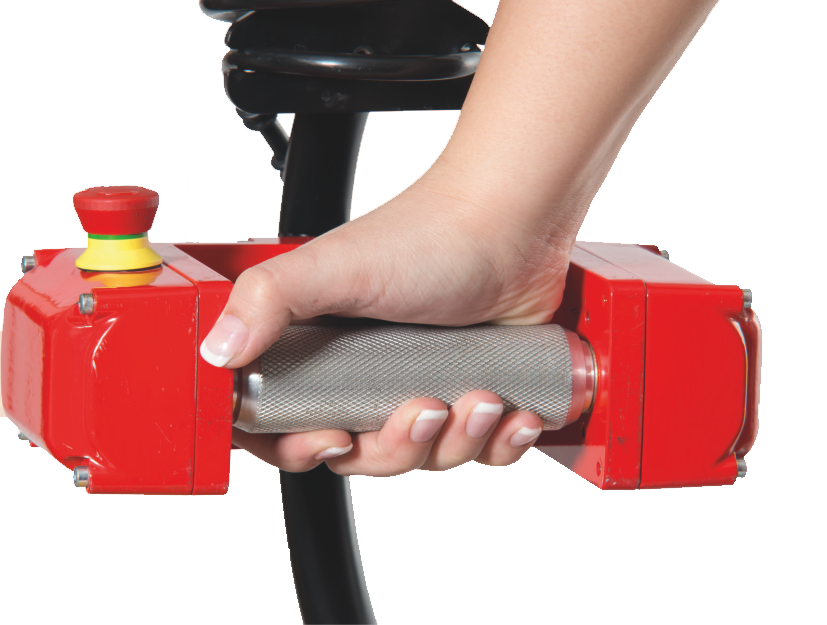
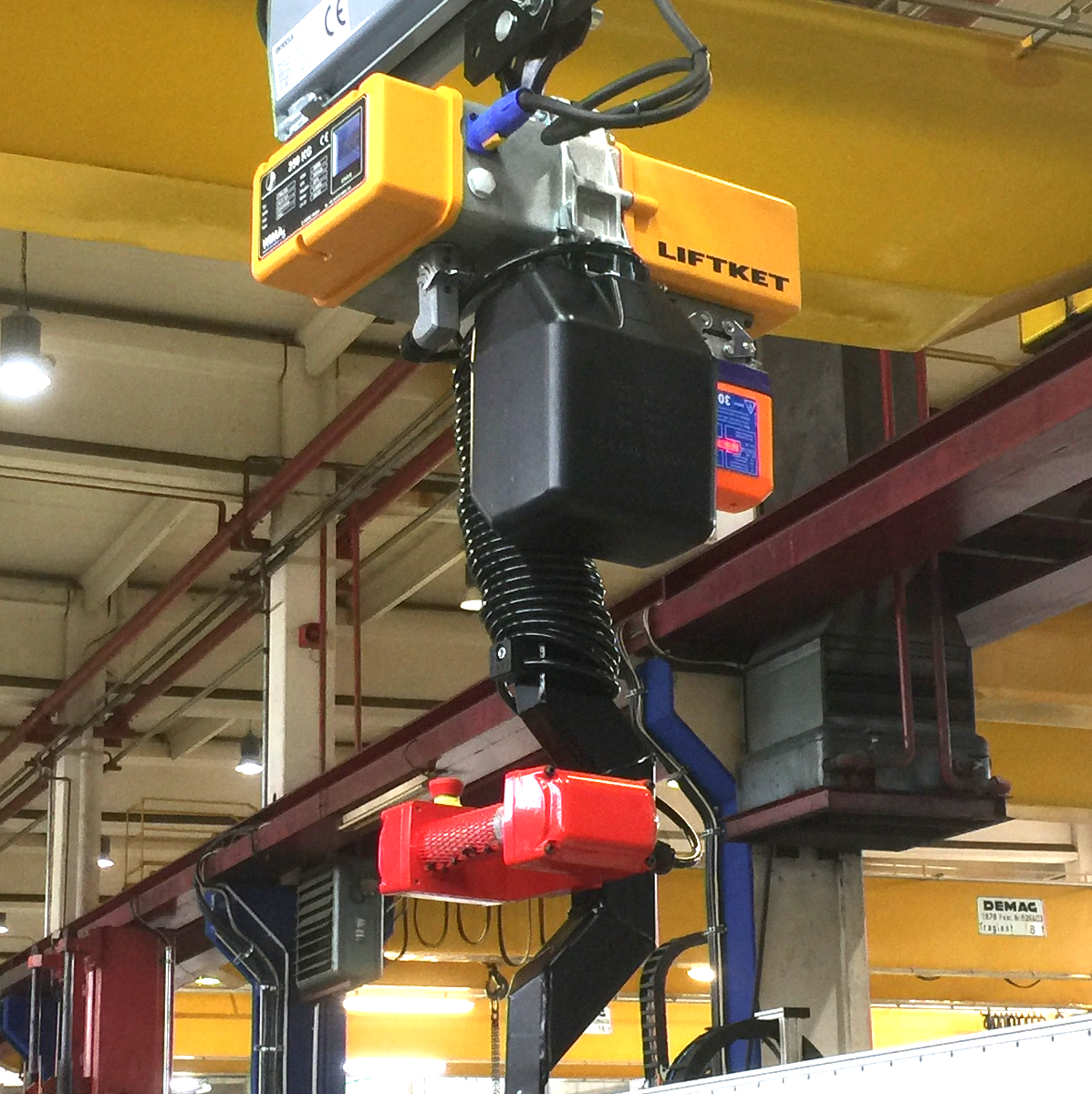
It allows sensitive speed control for precise positioning as well as reversal of the lifting direction. This makes one-handed control and load guidance possible. It can be mounted directly in the load path or on the load-handling device. An emergency-stop button is fitted as standard. Add-on modules are available for smaller installations such as solenoid valves or pneumatic modules.
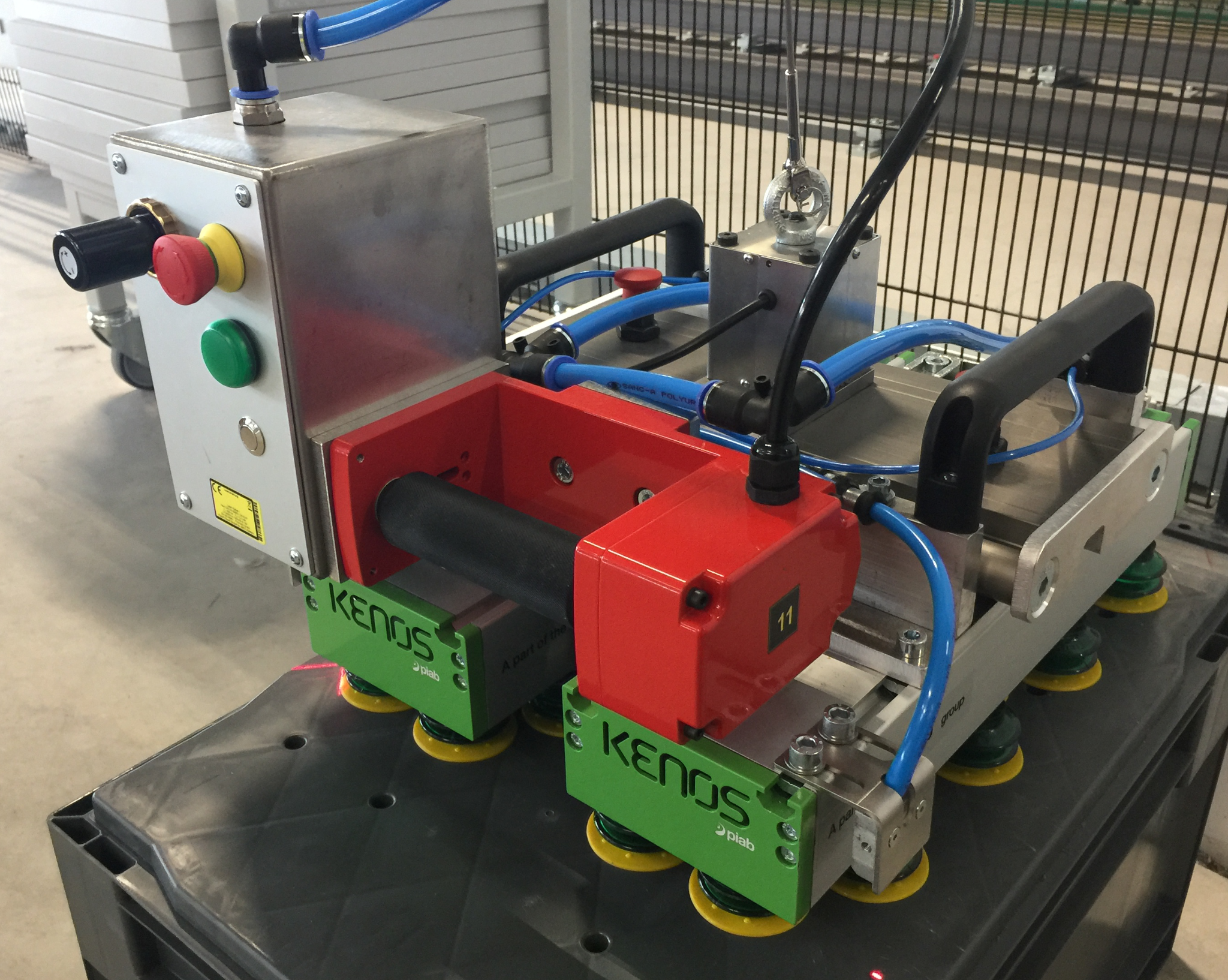
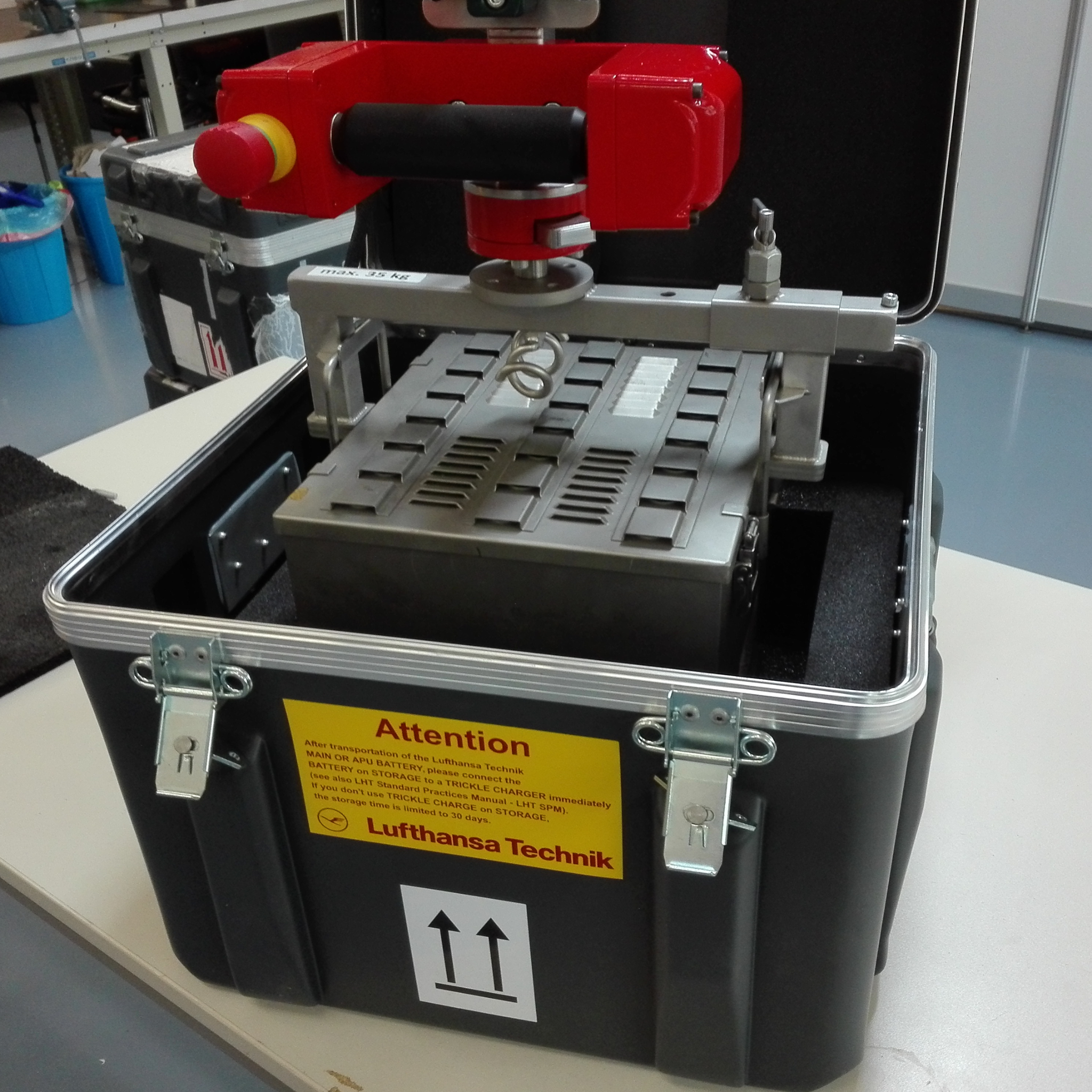
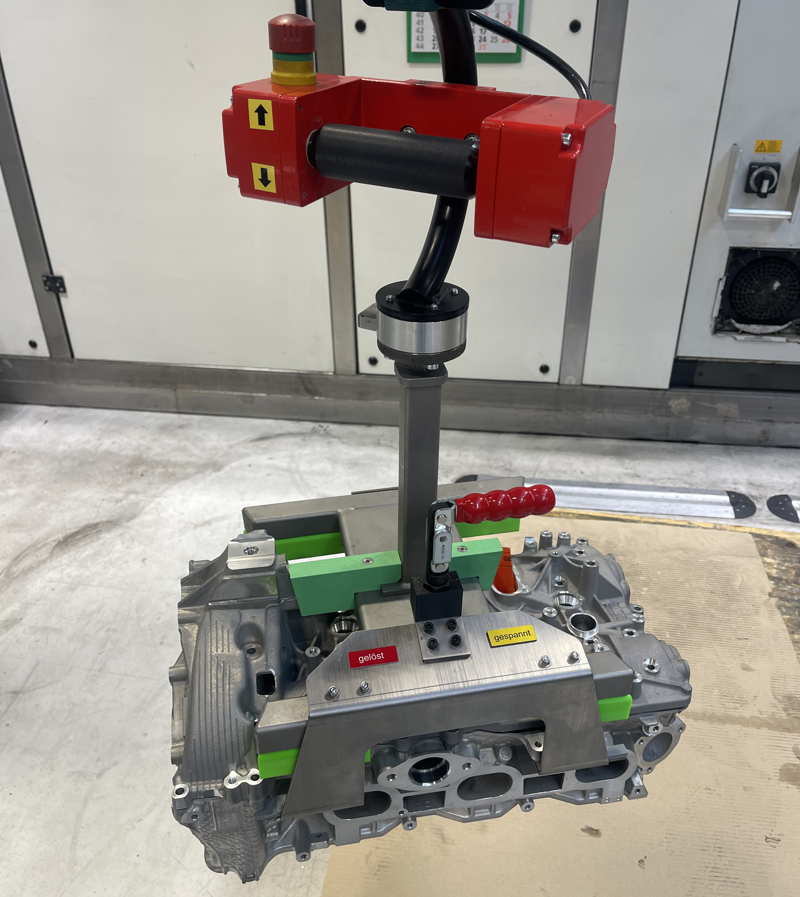
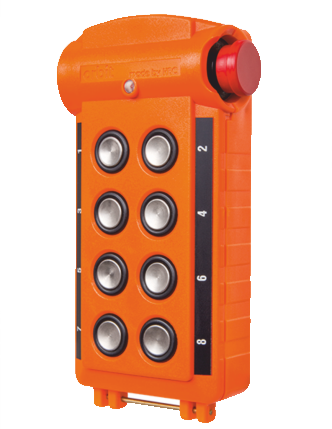
Some applications require new concepts, such as a pendant with joystick for continuously variable speed control or a conventional pendant with two-stage pushbuttons. The disadvantage remains that one hand is required solely to operate the lifting device.
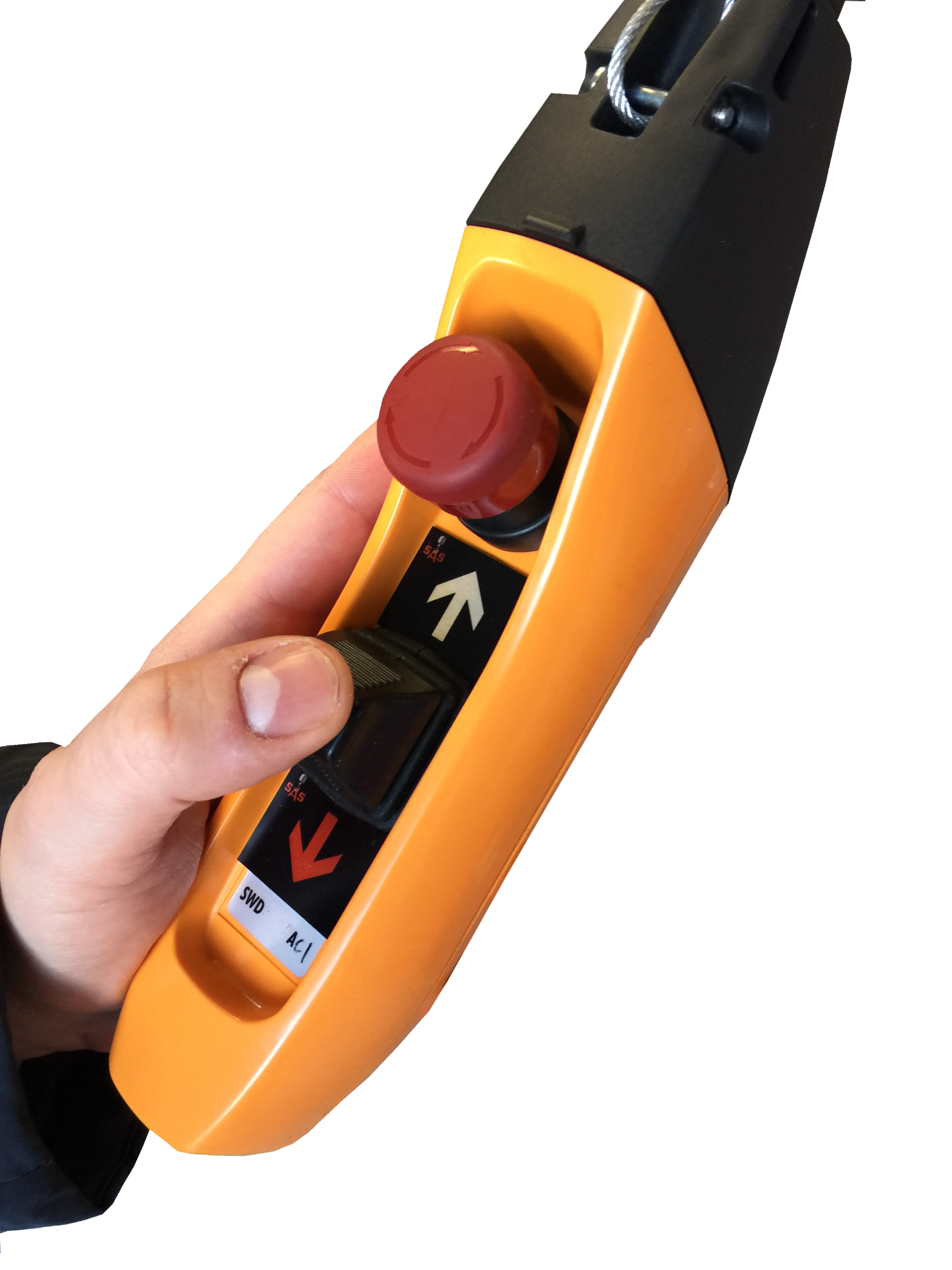
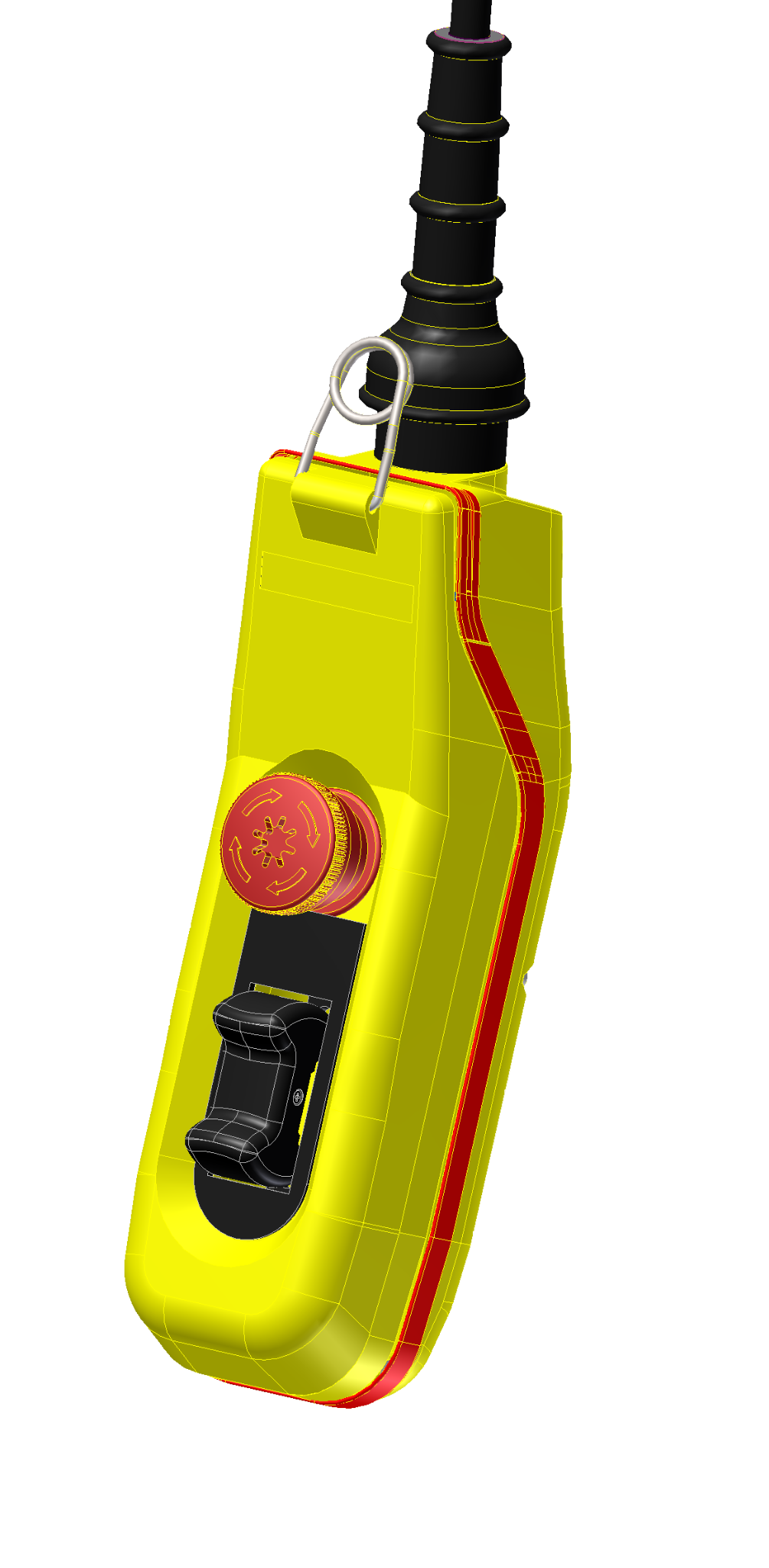
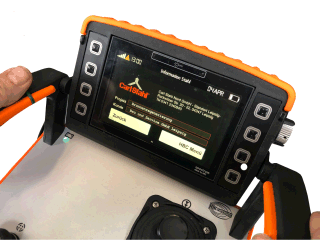
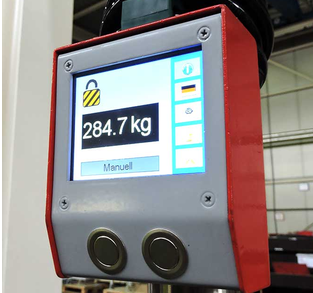
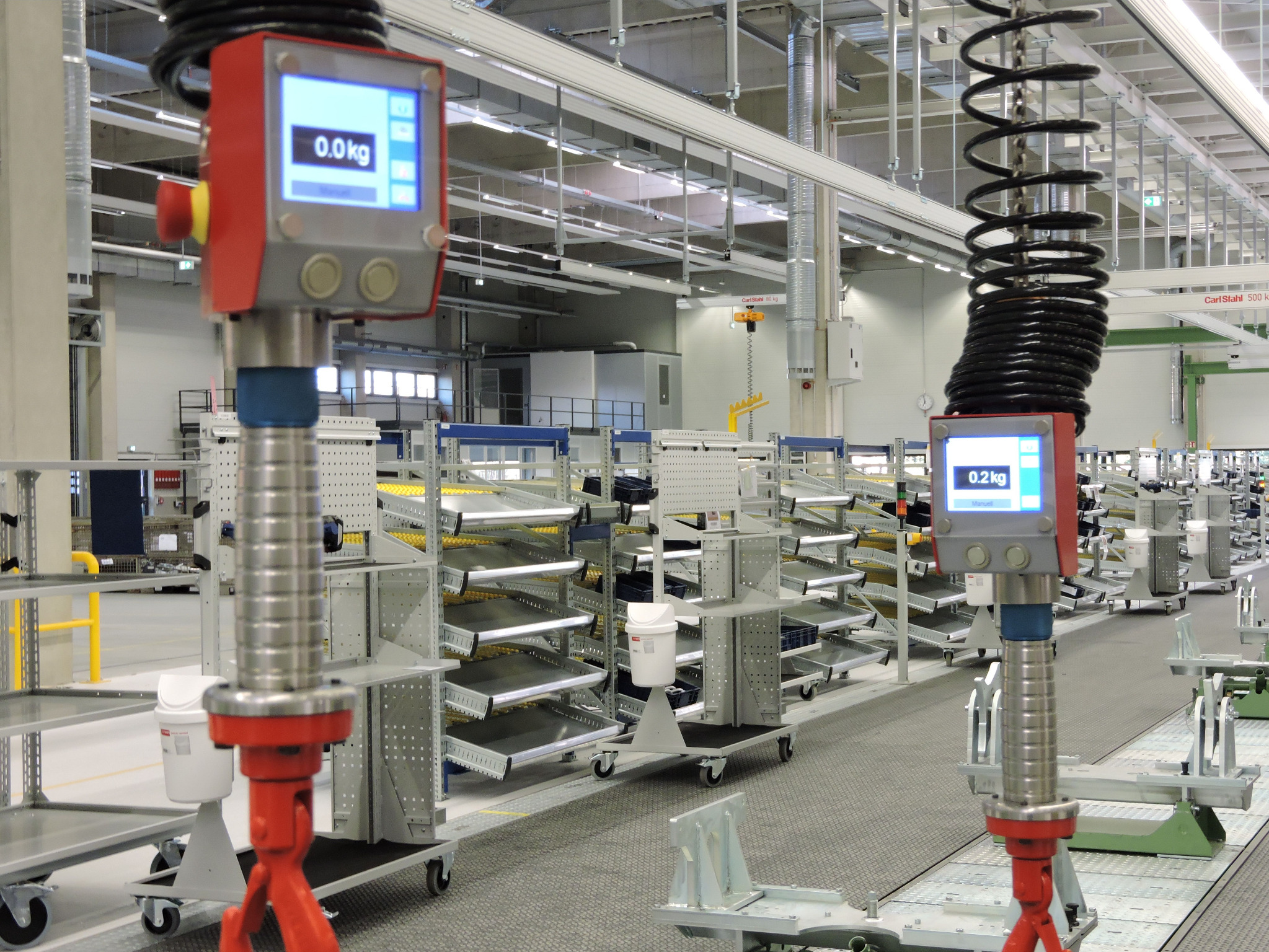
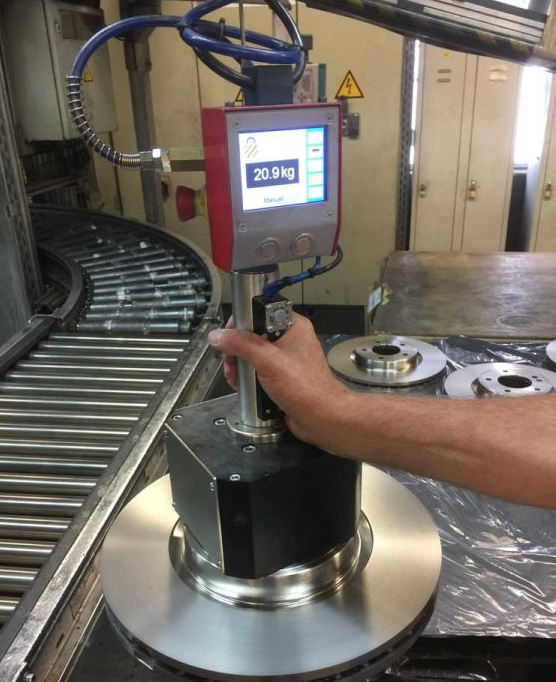
Position loads as if by magic. Fast travel is controlled by a control ring on the handle or by radio remote control. The lifting device can be programmed by entering parameters on the display. During balancing, the “weightless” load can be guided by hand with millimetre precision or held in position.
A simple “click-clack” signal can be transmitted cheaply with a low-cost remote control — but not safely. That quickly explains the price difference between TEMU and HBC. When it comes to functional safety, EU legislation leaves no room for compromise.
We implement projects ranging from simple two-stage operation to complex continuously variable control. Process data and setpoint/actual-value parameters are transmitted entirely via the PROFINET protocol.